Therapists want to know that their work is helping.
But in real clinical practice, that is not always easy to see. A client may attend every session, speak openly, and appear engaged, while still feeling that therapy is not quite helping in the way they hoped. Another client may seem quiet or uncertain, yet be making meaningful progress outside the room.
This is where Feedback-Informed Treatment becomes valuable.
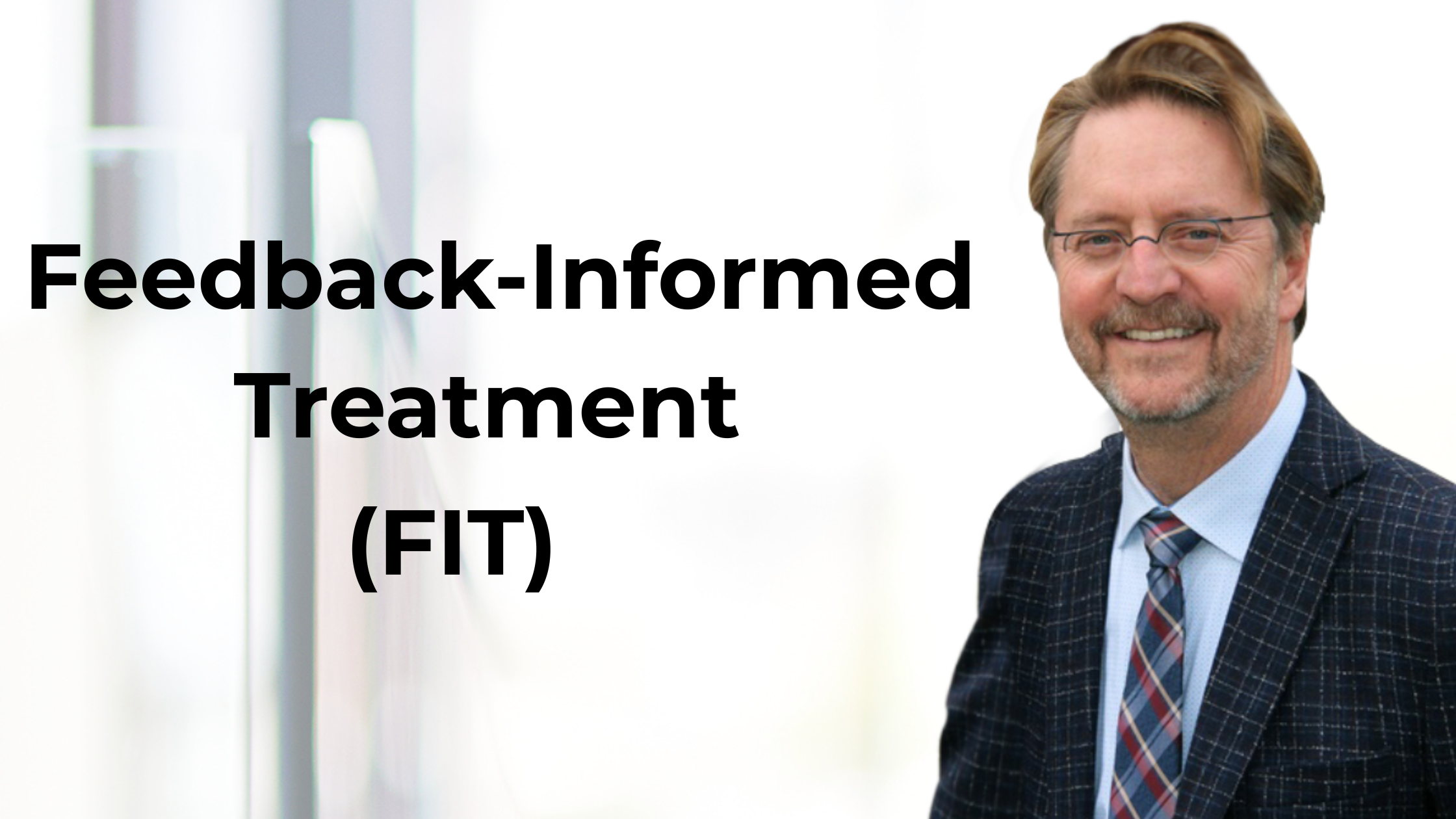
Feedback-Informed Treatment, often associated with the work of Scott D. Miller, Ph.D., is built around a simple but important idea: therapists should ask clients regularly whether therapy is helping and whether the session feels useful.
Scott D. Miller is widely recognized for his work on Feedback-Informed Treatment, the Outcome Rating Scale, the Session Rating Scale, and deliberate practice in psychotherapy. His public teaching has helped many clinicians think differently about outcome tracking, client feedback, and therapist development.
At its best, Feedback-Informed Treatment is not about collecting scores for the sake of data. It is about using feedback to create better clinical conversations.
Feedback-Informed Treatment, or FIT, is an approach that uses regular client feedback to improve therapy.
The therapist asks for feedback in two key areas:
- Outcome: Is the client improving?
- Alliance: Does the therapy relationship and session feel useful to the client?
This makes FIT different from measurement that only looks at symptoms or diagnosis. FIT pays attention to both progress and the client’s experience of therapy.
That matters because therapy is collaborative. A treatment plan may look strong on paper, but if the client does not feel understood, aligned, or involved, the work may not go far enough.
Feedback-Informed Treatment gives therapists a practical way to ask:
- Are we focusing on what matters?
- Is this approach working for you?
- Do you feel heard and understood?
- Are things improving outside the session?
- Should we adjust the way we are working?
These questions are not administrative. They are deeply clinical.
One of the strongest messages in Scott Miller’s work is that therapists should not rely only on intuition to know whether therapy is working.
Clinical judgment is important. Experience matters. The therapist’s observations matter. But therapists can still miss early signs that a client is not improving, losing hope, or feeling disconnected from the process.
Many clients do not directly say, “This is not helping.”
Some want to please the therapist.
Some avoid conflict.
Some do not know how to explain what feels wrong.
Some simply stop attending.
Feedback-Informed Treatment helps bring those concerns into the open earlier.
Instead of waiting for dropout, the therapist can ask for feedback session by session and respond while there is still time to adjust.
For clinicians, this is not about becoming less human or more mechanical. It is about becoming more responsive.
Two tools commonly connected with Feedback-Informed Treatment are the Outcome Rating Scale and the Session Rating Scale.
The Outcome Rating Scale, or ORS, helps track how the client is doing in important areas of life, such as personal wellbeing, relationships, social functioning, and overall progress.
The Session Rating Scale, or SRS, helps gather feedback about the session itself, including the relationship, goals, approach, and overall fit.
A simple way to understand them is:
ORS asks: “How are you doing?”
SRS asks: “How was today’s session for you?”
Together, they help therapists see both progress and process.
This is important because a client may feel connected to the therapist but not be improving. Or a client may be making progress but still feel that a particular session missed something important.
The value is not only in the scores. The value is in what the therapist asks next.
For example:
“I noticed your score changed this week. What do you think contributed to that?”
Or:
“You rated today’s session slightly lower. Was there something we missed?”
These small conversations can make therapy more collaborative and transparent.
Feedback-Informed Treatment gives clients a stronger voice in their own care.
This is one of the reasons it fits so naturally with modern, client-centered therapy. Instead of assuming the therapist knows how the client is experiencing the work, FIT invites the client to say more.
That can be powerful.
A client may not normally say, “I wanted to talk about something else today.”
But they may show it through session feedback.
A client may not say, “I am not sure this approach fits me.”
But a lower rating can open that conversation.
When therapists respond with curiosity rather than defensiveness, feedback can strengthen the alliance.
The therapist can say:
“Thank you for telling me. I would rather know this now so we can adjust together.”
That kind of response shows the client that honesty is welcome.

A common concern is that measurement tools might reduce therapy to numbers.
Used poorly, they can.
But Feedback-Informed Treatment is not meant to replace clinical judgment. It is meant to support it.
A score is not a diagnosis.
A graph is not a treatment plan.
A measure is not a substitute for empathy, skill, or clinical reasoning.
Feedback is simply another source of information.
The therapist still interprets the feedback in context. They still consider risk, culture, diagnosis, goals, history, and the client’s lived experience.
The best use of feedback is not to make therapy more rigid. It is to help therapists ask better questions sooner.
MyOutcomes helps therapists, counsellors, psychologists, clinics, and mental health organizations collect and use client feedback in everyday practice.
With MyOutcomes, clinicians can support:
- session-by-session outcome tracking
- therapeutic alliance feedback
- ORS and SRS workflows
- client progress monitoring
- clinical reporting
- supervision and review
- Feedback-Informed Treatment implementation
The goal is not to turn therapy into data entry.
The goal is to make feedback easier to collect, understand, and use in real clinical conversations.
For therapists, this means clearer visibility into progress and alliance.
For clients, it means their voice becomes a regular part of care.
For organizations, it means outcome tracking can support better clinical insight without losing sight of the human relationship at the center of therapy.
Scott D. Miller’s work on Feedback-Informed Treatment reminds therapists of something simple but easy to overlook:
We should ask clients whether therapy is helping.
Not once.
Not only at the end.
But regularly, respectfully, and with a willingness to adjust.
Feedback-Informed Treatment is not about scores alone. It is about using client feedback to make therapy more responsive, collaborative, and useful.
For MyOutcomes, this is the heart of the message:
Better feedback can lead to better therapy conversations.
MyOutcomes helps mental health professionals track outcomes, measure alliance, and use client feedback to support more responsive care.
- Explore MyOutcomes
- Learn More About Feedback-Informed Treatment
- Start Tracking Client Progress
- Request a Demo
Scott D. Miller is widely known for his work on Feedback-Informed Treatment, ORS, SRS, and deliberate practice in psychotherapy. His work emphasizes using regular client feedback to improve therapy outcomes and strengthen the therapeutic alliance.
The main idea is to ask clients regularly whether therapy is helping and whether the session feels useful. This feedback helps therapists adjust the work based on the client’s experience.
No. Feedback-Informed Treatment supports clinical judgment. It gives therapists additional information about cli
MyOutcomes helps clinicians collect client feedback, track outcomes, monitor therapeutic alliance, and use structured reporting to support Feedback-Informed Treatment in daily practice.