A practical look at adaptive care through Feedback-Informed Treatment (FIT).
Based on Daryl Chow’s article, “FIT: Feed-Back to Feed-Forward”, explores how clinicians can use client feedback to adapt their work.
What Feedback-Informed Treatment means
Feedback-Informed Treatment (FIT) is a way of making the client’s perspective part of ongoing care. The clinician routinely asks about the client’s well-being and about how the session is working for them. The purpose is not to grade the client or therapist. It is to make room for information that might otherwise stay unspoken and use it to guide the work.
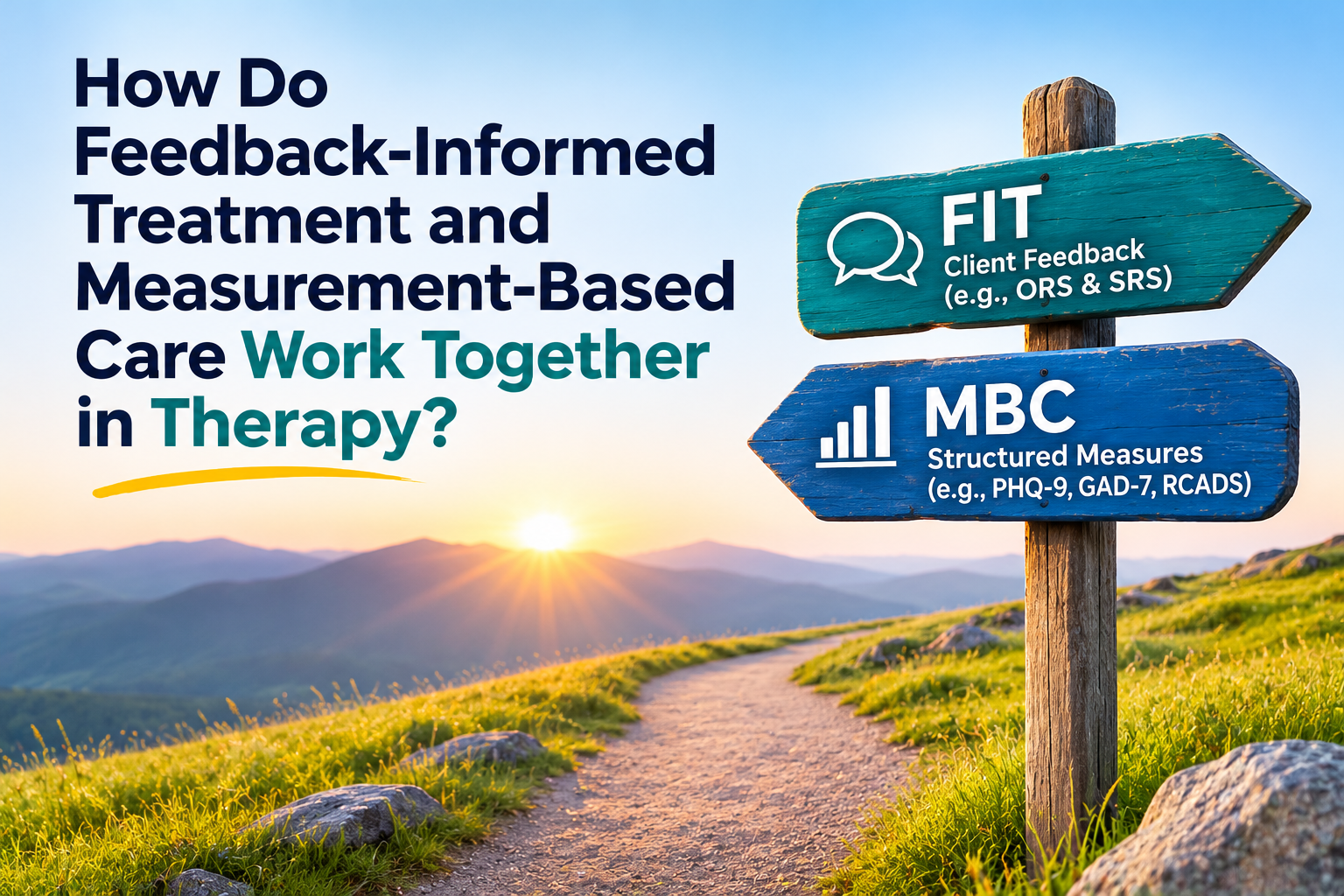
This connects with Routine Outcome Monitoring (ROM) and Measurement-Based Care (MBC): information is collected over time and brought into clinical decisions. FIT adds an essential human step: the clinician discusses the feedback with the client, considers it alongside the client’s circumstances and goals, and responds collaboratively.
The ORS and SRS are also central to PCOMS (Partners for Change Outcome Management System), a feedback system built around these measures. MyOutcomes supports their use in a digital FIT workflow, with tools such as progress tracking, trajectory indicators, and the Success Probability Index (SPI).
Two brief measures provide different kinds of feedback
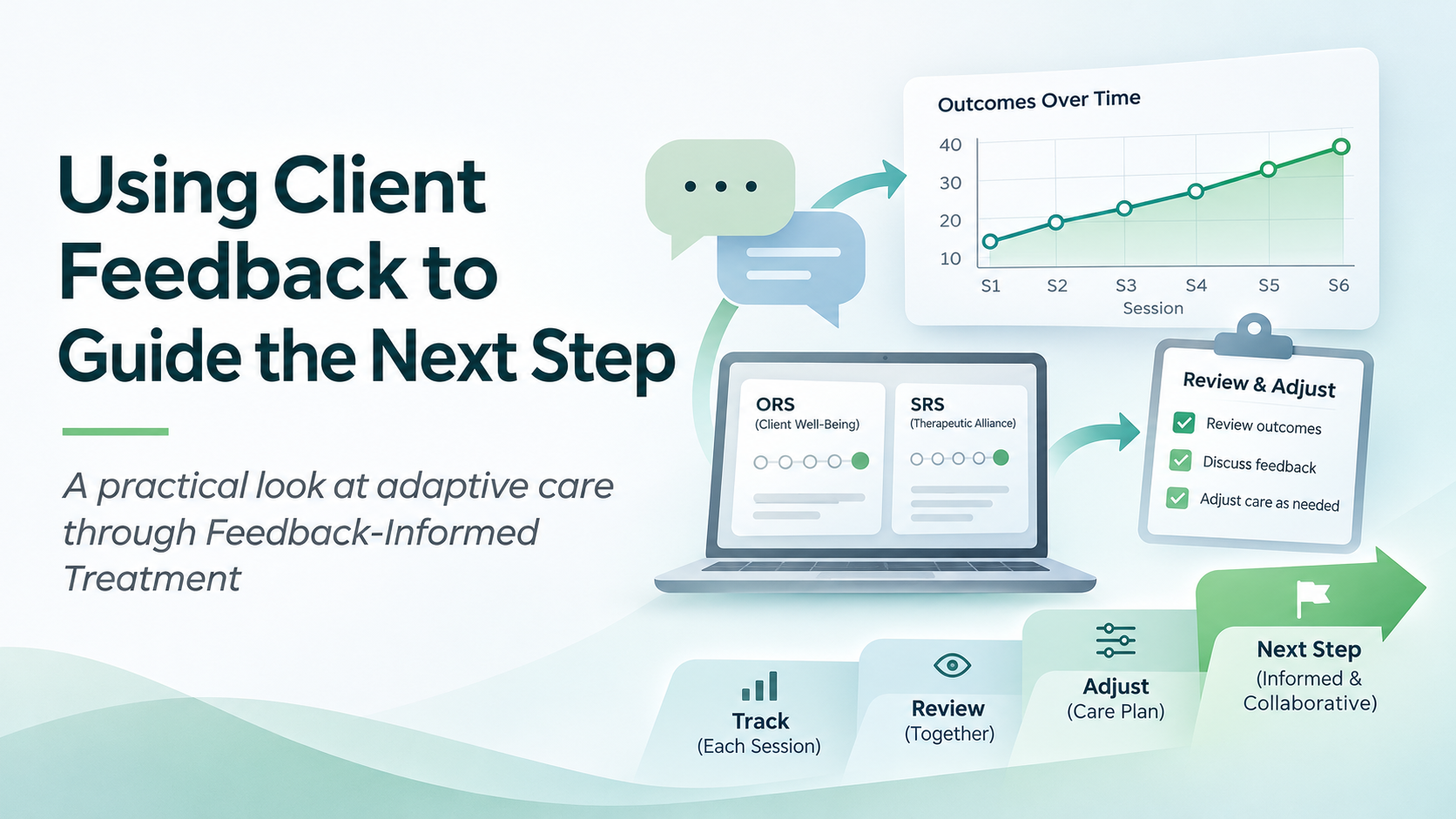
The Outcome Rating Scale (ORS) asks clients how they are doing across important areas of life, such as personal well-being, relationships, and daily functioning. It is commonly completed near the beginning of a session, so the clinician can hear how the client has been since the previous meeting.
The Session Rating Scale (SRS) asks how the client experienced the session, including the relationship, the goals or topics, the approach, and the session overall. It is commonly completed near the end of the session. ORS and SRS answer different questions: one focuses on the client’s broader progress, and the other on how the work together is landing.
Treat scores as signals to explore
A score does not explain itself. A lower ORS score could reflect a difficult week, a setback, a change in circumstances, or a concern that deserves more attention. A strong SRS score does not mean every topic has been resolved, just as a lower score does not automatically mean the relationship has failed. The clinician’s task is to ask and listen before deciding what the information means.
When a client reports improvement, the clinician might ask what has helped and how to build on it. When progress stalls or a score drops, the clinician might ask what has been harder or what has changed. If the session feedback suggests that the goals or approach did not fit, the clinician can invite the client to describe what would have made the session more useful.
Turn feedback into a shared next step
Feedback becomes practical when it influences the next conversation or plan. Clinician and client can decide what to continue, what to adjust, and what to check again at the next session. This is not about following a score mechanically. It is about using new information to make a thoughtful adjustment while staying focused on what matters to the client.
For example, imagine a client whose well-being rating has fallen while their session feedback remains positive. That pattern may suggest that the client values the therapeutic relationship but is facing growing challenges outside the session. The clinician can acknowledge both signals, ask what has changed, and decide with the client whether to focus on those pressures, revisit the treatment goals, or take another step. The pattern informs the conversation; it does not prescribe the answer.
Use data without handing over clinical judgment
Progress graphs and predictive indicators can help clinicians notice patterns that are easy to miss from memory alone. MyOutcomes provides session-by-session tracking, predicted trajectories, and the Success Probability Index (SPI) as additional information to consider. These indicators can support a closer look at a case, but they should be interpreted alongside the client’s own account, relevant context, and the clinician’s professional judgment.
The same principle applies at the agency level. Aggregated reports can help leaders and supervisors identify patterns across clinicians, clients, or programs and decide where more support or quality improvement may be useful. Data can guide questions for supervision and service review; it should not be reduced to a scorecard that discourages honest feedback or thoughtful clinical work.
Build a culture where feedback is safe
For FIT to be useful, clients need to know that honest feedback is welcome—even when it is difficult to hear. Clinicians can explain why they ask, thank clients for being direct, and show that feedback can lead to a real conversation or adjustment. When clients see that their perspective matters, the measures become part of care rather than another form to complete.
A simple routine can help: collect the client’s feedback, review it together, agree on a next step, and check whether that step helped. Repeated over time, this process makes treatment more responsive to the person receiving it.