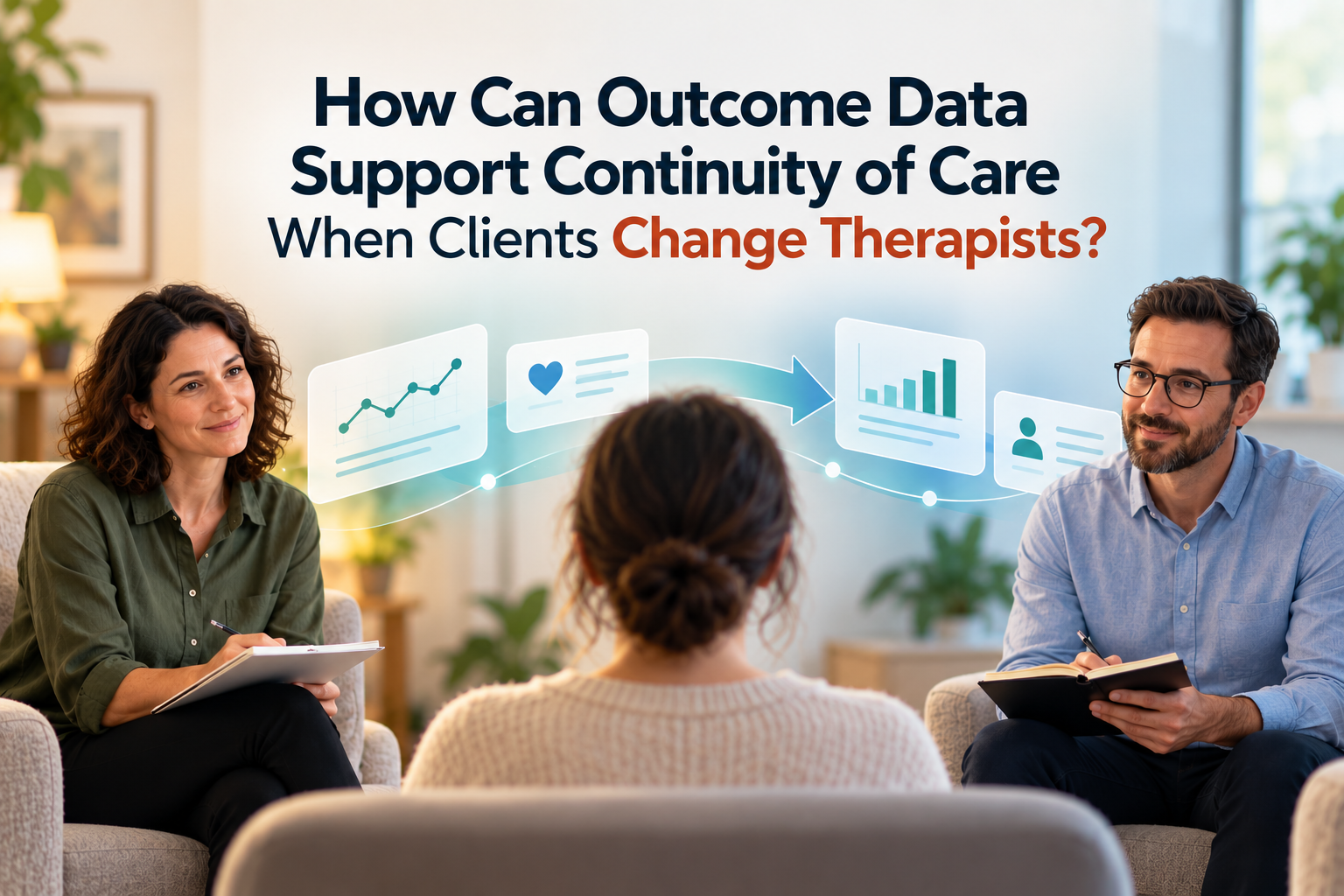
Therapists have always used information to understand how clients are progressing.
They listen to client experiences, review goals, observe changes, and adjust treatment based on what they learn.
Session-by-session outcome monitoring adds another structured source of information by tracking a client’s progress and experience throughout therapy—not just at the beginning or end.
Instead of asking only: “How was the client doing when therapy started?”
Session-by-session monitoring asks: “How is the client experiencing therapy over time?”
This ongoing approach helps therapists and clients notice patterns, reflect on progress, and have more informed conversations throughout treatment.
It does not replace clinical judgment.
Instead, it provides another perspective that can complement the therapist’s expertise and the client’s own experience.
Why Is Session-by-Session Outcome Monitoring Important in Therapy?
Therapy progress is not always straightforward.
Some clients improve steadily.
Others experience periods of progress, uncertainty, setbacks, or changes that may not be immediately obvious.
Without regular measurement, it can sometimes be difficult to identify these patterns.
Session-by-session outcome monitoring can help therapists and clients:
Track changes over time
Notice whether therapy is moving in a helpful direction
identify when progress may need further discussion
Understand the client's perspective throughout treatment
Support collaborative treatment decisions.
Regular outcome monitoring is especially valuable because therapy is an evolving process.
The information that matters at the beginning of treatment may look different several sessions later.
How Does Session-by-Session Outcome Monitoring Work in Therapy?
The process is designed to be simple and integrated into normal clinical practice.
A typical workflow involves:
1. Collecting feedback regularly
Clients complete a brief outcome measure that captures their experience, progress, or wellbeing.
2. Reviewing the information
The therapist reviews the information alongside other clinical knowledge.
3. Looking for meaningful patterns
The focus is not only on one individual score.
Instead, therapists can consider:
- changes over time;
- progress trends;
- unexpected changes;
- areas that may need exploration.
4. Using the information in clinical conversations
When appropriate, feedback can become part of the discussion between therapist and client.
The purpose is not simply to collect information.
The purpose is to use it.
What Is the Difference Between Session-by-Session Measurement and Traditional Assessment?
Traditional assessment and ongoing outcome monitoring both provide valuable information, but they serve different purposes.
A traditional assessment often focuses on understanding the client at a specific point in time, such as the beginning of therapy.
It may help answer questions like:
- What concerns brought the client to therapy?
- What challenges are they experiencing?
- What goals should be explored?
Session-by-session outcome monitoring focuses on what happens throughout treatment.
It helps answer questions like:
- Is the client experiencing meaningful change?
- Is therapy moving in a helpful direction?
- Has something changed that deserves attention?
The difference is the timing and purpose.
Assessment helps establish understanding.
Ongoing measurement helps maintain understanding as therapy develops.
How Does Session-by-Session Outcome Monitoring Support Feedback-Informed Treatment?
Feedback-Informed Treatment (FIT) is based on the idea that client feedback can help therapists understand and improve the therapeutic process.
Session-by-session outcome monitoring provides a structured way to gather that feedback consistently.
The relationship can be understood as:
Measurement provides information.
Feedback creates conversation.
Conversation supports clinical decisions.
FIT is not about following numbers instead of listening to clients.
It is about using information from the client’s perspective alongside professional expertise.
When feedback is collected regularly, therapists have more opportunities to notice changes and respond thoughtfully.
For more on turning feedback into action, see:
How to Close the Feedback Loop in Therapy
What Can Therapists Learn From Tracking Outcomes Over Time?
One of the biggest benefits of session-by-session monitoring is that it allows therapists to look beyond individual moments.
A single session may not show the full picture.
Patterns over time can provide additional insight.
For example, outcome data may help highlight:
Progress patterns
A client may show steady improvement over several sessions.
Periods of slower change
A client may experience limited movement despite ongoing treatment.
Unexpected changes
A client’s experience may shift in a way that invites further exploration.
Differences between perspectives
The therapist and client may have different impressions of progress.
These patterns do not automatically provide answers.
Instead, they create opportunities for better questions and deeper conversations.
Learn more about understanding progress patterns:
How to Read Improvement, Plateau, and Deterioration Patterns
Do Outcome Measures Replace Clinical Judgment?
No.
Outcome measures are not designed to replace the therapist’s knowledge, experience, or professional judgment.
Therapy involves many factors that cannot be captured by a single score.
Clinical decisions require consideration of:
- client goals
- personal circumstances
- therapeutic relationship
- clinical presentation
- therapist expertise
- client preferences
Outcome data is one additional source of information.
The most useful approach is not: “What does the score say?”
It is: “What can this information help us understand?”
How Can Therapists Use Outcome Monitoring Without Making Therapy Feel Like Data Collection?
A common concern is that regular measurement could make therapy feel less personal.
However, the value of outcome monitoring depends on how it is used.
When integrated thoughtfully, it can support therapy by:
- creating opportunities for reflection
- helping clients communicate their experience
- supporting conversations about progress
- highlighting areas worth exploring.
The measure itself is not the therapy.
The conversation around the information is where the value comes from.
The goal is not to focus on numbers.
The goal is to better understand the person behind the information.
How Does Session-by-Session Outcome Monitoring Support Measurement-Based Care?
Measurement-Based Care (MBC) is an approach where clinical information is collected and used systematically to support treatment decisions.
Session-by-session outcome monitoring is one practical way that clinicians can apply MBC principles.
MBC is not about replacing therapeutic conversations with measurement.
It is about combining:
- clinical expertise
- client feedback
- structured information
- ongoing review
By tracking outcomes throughout care, therapists can develop a clearer picture of what is happening and make more informed decisions with their clients.
How Does Session-by-Session Monitoring Benefit Growing Practices?
For individual therapists, outcome monitoring can provide insight into individual client progress.
For growing practices, it can also support broader learning.
When used appropriately, outcome information can help practices:
- understand patterns across services;
- support clinical discussions;
- identify areas for professional development;
- strengthen a shared commitment to client-centred care.
For more on using outcome data across a practice:
How Growing Therapy Practices Can Use Outcome Data
Final Thoughts
Session-by-session outcome monitoring is not about measuring therapy instead of practicing therapy.
It is about creating another way to understand progress, recognise changes, and include the client’s perspective throughout treatment.
By collecting and using outcome information consistently, therapists can develop a clearer understanding of the therapeutic process and support more collaborative conversations.
The goal is simple: Use information to better understand the client’s experience and support thoughtful clinical decisions.
Want to bring more visibility to client progress?
Learn how MyOutcomes helps therapists and organizations use outcome tracking and Feedback-Informed Treatment to better understand progress patterns and support clinical decision-making.
Request a quote to find the right solution for your practice.