A real-world reflection on Feedback-Informed Treatment, client voice, and improving therapy outcomes
For many therapists, one of the most important questions is also one of the hardest to answer: Are our clients actually improving through therapy?
Therapists bring years of training, experience, and clinical judgement into every session. They listen carefully, build therapeutic relationships, and support clients through some of life’s most difficult challenges. However, therapy is a collaborative process, and the therapist’s perspective is only one part of understanding whether treatment is working. The client’s experience — whether they feel understood, whether they feel progress is happening, and whether therapy is helping them move toward their goals — is equally important.
This question led Relationship Therapy Center (RTC), the organization behind MN Couples Counseling, to integrate Feedback-Informed Treatment (FIT) into its clinical practice and begin consistently measuring client outcomes. Years later, RTC has gained valuable insight into what happens when client feedback becomes a regular part of the therapy process.
Starting With a Simple Question: Is Therapy Helping?
What RTC's Outcome Data Shows
After implementing FIT and tracking client outcomes over time, RTC has been able to examine patterns of improvement across its practice.
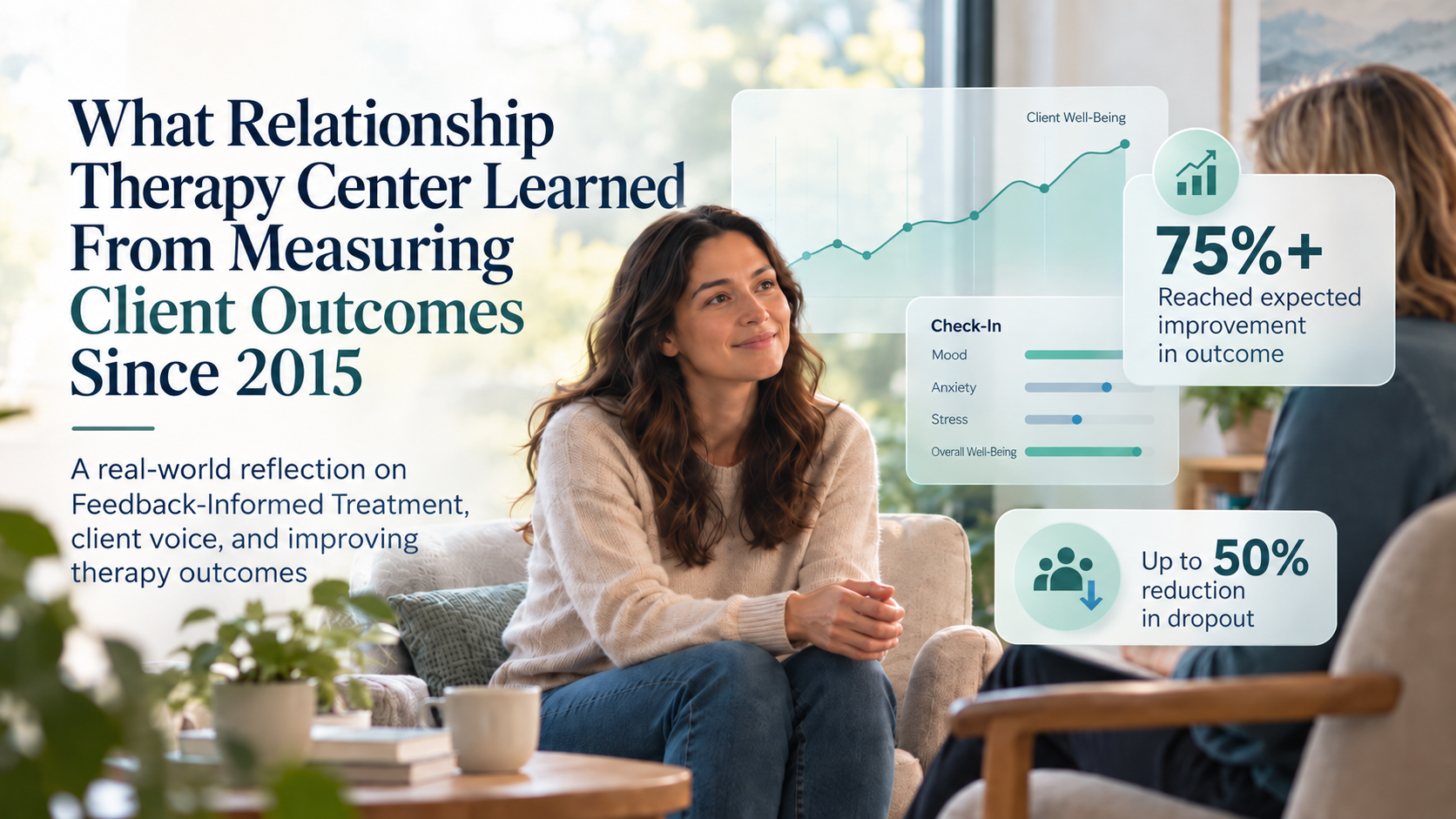
According to RTC’s published outcome data, more than 75% of clients who began therapy at RTC in 2015 or later and worked with FIT therapists reached their expected improvement in outcome, as defined by the Outcome Rating Scale (ORS) within the MyOutcomes® database.
This figure should be understood in context. It does not mean that every client’s therapy journey looks the same, that every challenge is resolved in the same way, or that therapy outcomes can be reduced to a single number. Every client enters therapy with different experiences, goals, circumstances, and challenges.
Instead, this measurement reflects something important: when a practice consistently listens to clients and tracks progress over time, it gains a clearer understanding of whether treatment is moving in the expected direction.
When Feedback Changes the Conversation
One of the biggest lessons RTC has learned is that feedback is most valuable when it creates dialogue.
A measure does not replace the therapist’s expertise or determine the treatment approach. Instead, it provides another opportunity to ask important questions: Are we focusing on what matters most to this client? Does the client feel understood? Is the current approach helping? Is there something we should adjust?
These conversations are central to Feedback-Informed Treatment. The value of measurement is not the score itself; the value comes from what happens because the therapist and client are willing to explore what the feedback reveals.
Learning When Therapy Needs to Adjust
In therapy, progress is not always linear. There are times when clients may feel stuck, when goals need to be revisited, or when an approach that was initially helpful may need to change.
Routine feedback helps bring these moments into awareness. The feedback does not provide all the answers, but it helps create the right questions.
A therapist and client can explore whether they need to adjust the focus of treatment, discuss the therapeutic relationship, or consider a different approach. For RTC, this has been one of the important lessons from years of measuring outcomes: progress improves when therapists and clients remain curious together.
What Years of Measurement Have Taught RTC
After years of using Feedback-Informed Treatment, RTC’s experience demonstrates that outcome measurement is not about making therapy less personal. It is about making sure the client’s voice remains present throughout the process.
The strongest therapy relationships are built on trust, openness, and collaboration. Feedback supports those qualities by creating more opportunities for honest conversations about what is working and what may need to change.
RTC’s experience also demonstrates that measurement is not simply about collecting information. It is about creating a culture where therapists and clients can work together with greater awareness.
The Future of Therapy: Listening More Carefully
Therapy will always depend on human connection, empathy, and clinical expertise. Numbers cannot replace those essential elements, but when combined with the wisdom of the therapist and the experience of the client, feedback can help create a more responsive and collaborative approach to care. RTC’s journey since 2015 highlights a simple idea: better outcomes begin with better listening.
About Relationship Therapy Center (RTC)
Relationship Therapy Center (RTC), the organization behind MN Couples Counseling, provides therapy services for individuals, couples, and families. RTC has incorporated Feedback-Informed Treatment into its clinical practice as part of its commitment to understanding client experiences and using feedback to support the therapeutic process.
About MyOutcomes®
MyOutcomes® is a platform that supports clinicians and organizations implementing Feedback-Informed Treatment by helping them collect, organize, and review client feedback and outcome data.
Through measures such as the Outcome Rating Scale (ORS) and Session Rating Scale (SRS), MyOutcomes® helps make client feedback visible within the therapy process while supporting the importance of clinical judgement and human connection.
Want to see how Feedback-Informed Treatment can fit into your clinical practice?
Book a MyOutcomes® demo to explore how routine client feedback can become part of everyday care.