Why collecting feedback is only the first step toward more responsive therapy
Many therapists understand the value of gathering client feedback.
They may use outcome measures to monitor progress, session feedback tools to understand the therapeutic relationship, or structured assessments to better understand a client’s experience.
However, collecting feedback is only the beginning.
The real value comes from what happens after the feedback is collected.
A score, rating, or response does not improve therapy on its own. The benefit comes when therapists use that information to start meaningful conversations, understand the client’s perspective, and make thoughtful adjustments when needed.
This process is often described as closing the feedback loop.
In Feedback-Informed Treatment (FIT), feedback is not simply information to record. It is information to discuss, understand, and use to support better clinical decisions.
What Is the Feedback Loop in Therapy?
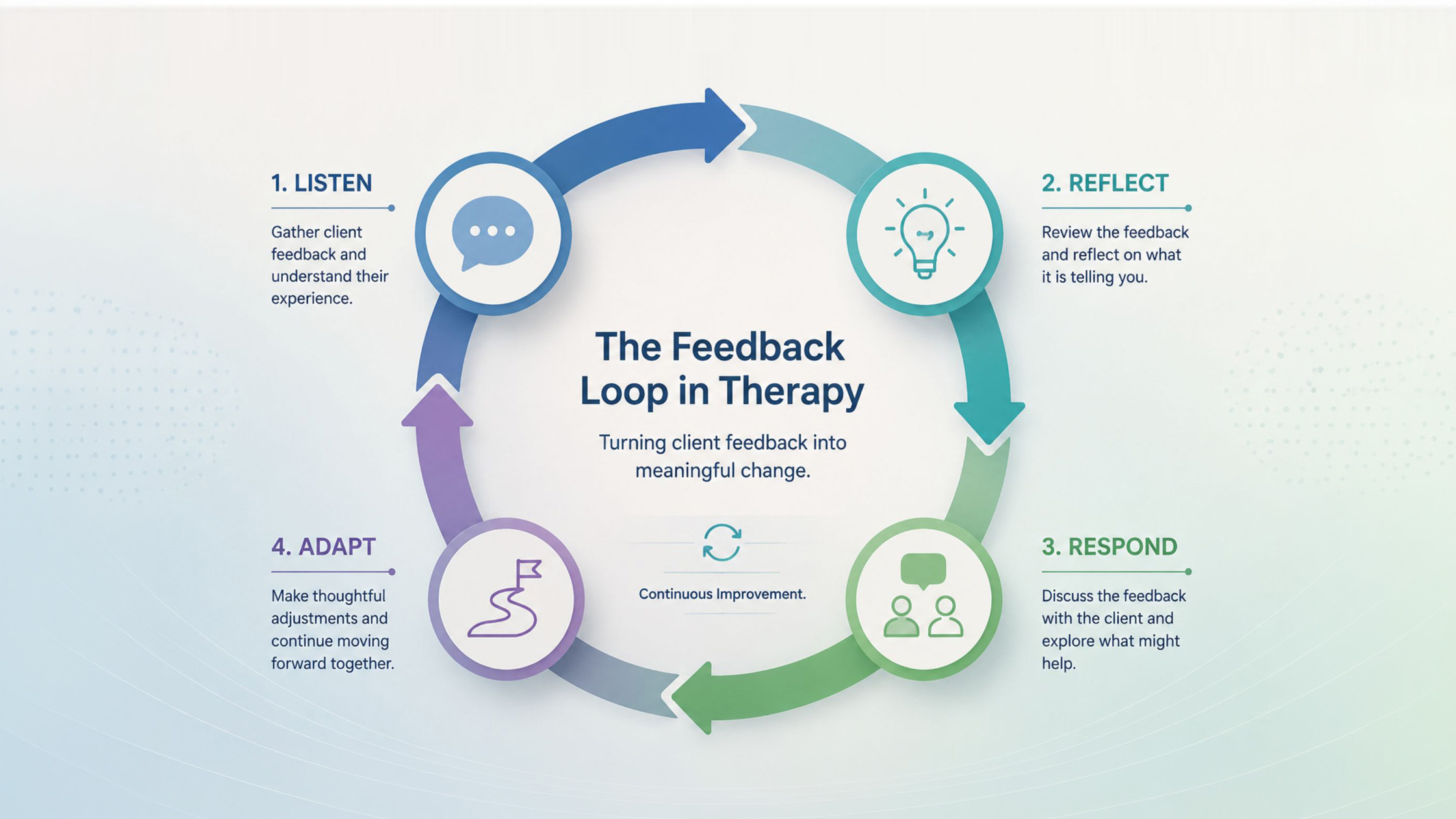
A complete feedback loop involves:
- Gathering feedback Understanding the client’s perspective through structured measures or conversations.
- Reviewing the feedback Looking for patterns, changes, or areas that may need attention.
- Discussing the feedback Creating space for the client to share their experience.
- Responding to what is learned Adjusting goals, strategies, communication, or the therapeutic approach when appropriate.
Why Collecting Outcome Measures Is Only the First Step
However, measurement alone does not explain:
- why a client feels stuck;
- why progress has slowed;
- whether therapy feels helpful to the client;
- whether the current goals still matter;
- what changes might improve the therapeutic process.
How Feedback-Informed Treatment Uses Client Feedback
Feedback-Informed Treatment (FIT) is based on the idea that client feedback can help therapists make more informed decisions throughout therapy.
Rather than asking: “Did we collect the measure?”
FIT encourages a more important question: “What can we learn from the client’s experience?”
This approach helps therapists use feedback to explore areas such as:
- whether therapy is moving in a helpful direction;
- whether goals remain meaningful;
- whether the client feels understood;
- whether changes may improve the therapeutic process.
FIT does not replace therapist expertise.
Instead, it combines clinical judgement with information from the person receiving therapy.
How ORS and SRS Help Therapists Understand Client Experience
Two commonly used feedback tools within FIT are the Outcome Rating Scale (ORS) and Session Rating Scale (SRS).
The ORS focuses on the client’s overall sense of wellbeing and functioning. It helps therapists and clients monitor progress over time.
The SRS focuses on the client’s experience of the session, including aspects of collaboration, goals, approach, and the therapeutic relationship.
Together, these types of feedback provide different perspectives:
ORS: Is the client experiencing meaningful progress?
SRS: Is the therapy process working well from the client’s perspective?
The value comes from using both types of information to support ongoing conversations.
How to Use Client Feedback to Guide Therapy Decisions
Feedback becomes meaningful when it influences what happens next.
When client feedback suggests that something may need attention, therapists can explore:
Whether therapy goals still reflect what matters most to the client
Clients’ priorities can change during therapy.
Revisiting goals can help ensure that treatment continues to focus on what is most important to the client.
Whether the therapeutic approach feels helpful
A client may understand the goals of therapy but feel that the current approach is not the best fit for their needs.
Feedback can help identify opportunities to adjust pace, strategies, or focus.
Whether the client feels understood and involved
A strong therapeutic relationship depends on collaboration.
Client feedback can reveal whether the client feels heard, respected, and included in the process.
Whether external factors are affecting progress
Changes in relationships, work, health, stress, or other life circumstances can influence therapy outcomes.
Feedback can help identify factors that may need consideration.
What to Explore When Feedback Suggests Something Needs Attention
When feedback indicates concerns, therapists can approach the conversation with curiosity.
Some areas to explore include:
Is there something the client expected that is not happening?
The client may have different expectations about the therapy process, goals, or pace.
Does the client feel comfortable sharing concerns?
Some clients may hesitate to express dissatisfaction unless they feel their feedback will be welcomed.
Are we focusing on the issues that feel most important right now?
The client’s priorities may have shifted since therapy began.
Is there something about the therapy process that could be adjusted?
Small changes in communication, goals, or approach may improve alignment.
These questions are not a checklist or a formula. They are opportunities to better understand the client’s experience.
Common Mistakes When Using Client Feedback
Treating feedback as a task to complete
Collecting a measure without discussing the results limits its value.
Feedback becomes useful when it informs understanding and action.
Assuming the therapist’s perspective is the complete picture
A session may feel productive to the therapist while the client experiences it differently.
Client feedback provides another important perspective.
Becoming defensive when feedback is difficult
Unexpected feedback can feel uncomfortable.
However, responding with openness can create opportunities for stronger collaboration.
Using feedback only when problems appear
Feedback is most valuable when it becomes a regular part of therapy, not only when something goes wrong.
How Client Feedback Strengthens the Therapeutic Relationship
When clients experience their feedback as welcomed and taken seriously, it can support greater openness and collaboration.
Feedback gives clients a structured opportunity to communicate
- what is helping;
- what is not helping;
- what they need more of;
- what may need to change.
Rather than creating distance between therapist and client, thoughtful use of feedback can strengthen the partnership at the centre of therapy.
Turning Feedback Into More Responsive Therapy
The purpose of Feedback-Informed Treatment is not simply to collect more information.
It is to help therapists remain responsive.
ORS, SRS, and other feedback tools provide valuable perspectives, but the most important step is what happens afterward:
- discussing the feedback;
- understanding the client’s experience;
- considering adjustments;
- continuing the conversation.
Closing the feedback loop transforms measurement into meaningful clinical practice.
Final Thoughts
Client feedback is most valuable when it becomes part of the therapeutic conversation.
Collecting outcome measures is an important first step, but the real impact comes from listening, reflecting, and responding.
Feedback-Informed Treatment helps therapists use structured feedback to support collaboration, strengthen therapeutic relationships, and make more informed decisions throughout treatment.
Ready to make client feedback part of everyday practice?
MyOutcomes provides practical tools for collecting feedback, tracking outcomes, and supporting more collaborative conversations between therapists and clients.
Start your free trial and explore how feedback-informed practice can fit into your workflow.