Why tracking changes over time helps therapists make more informed treatment decisions
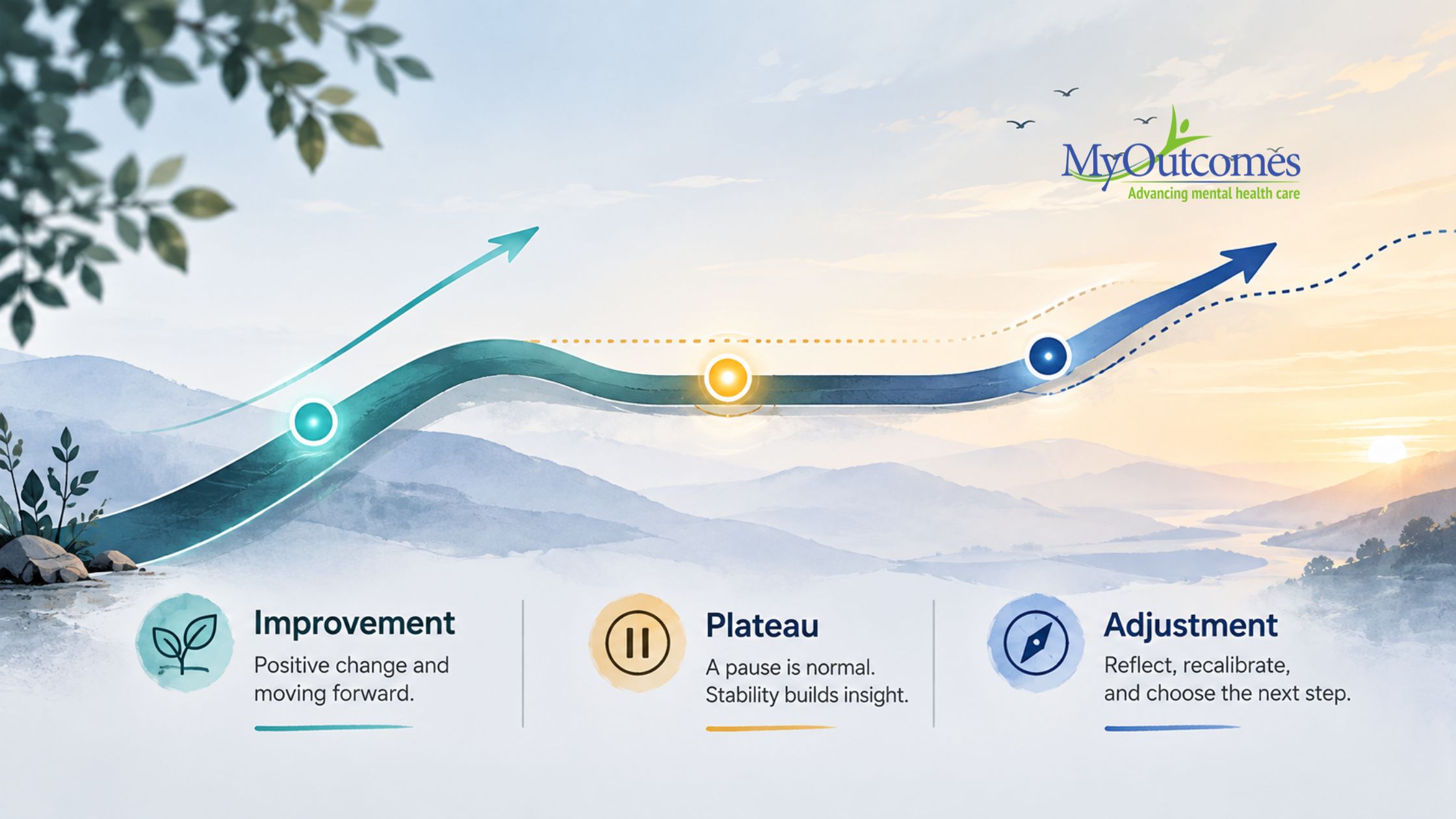
Therapy progress is rarely a straight line.
Some clients experience steady improvement. Others make progress, reach a plateau, or experience periods where their difficulties increase before moving forward again.
For therapists, understanding these different patterns is an important part of providing responsive care.
Measuring therapy progress helps clinicians gain another perspective on the client’s experience over time. When combined with professional judgement and client feedback, outcome monitoring can help therapists recognize when therapy is moving in a helpful direction and when further exploration may be needed.
The goal of measuring progress is not simply to decide whether therapy is “working.”
The goal is to better understand the client’s experience and make thoughtful decisions throughout treatment.
Why Measuring Therapy Progress Matters
Every client brings a unique experience into therapy.
Two people with similar concerns may respond differently to the same therapeutic approach. Some may experience rapid improvement, while others may need adjustments along the way.
Without structured progress tracking, therapists often rely on:
- clinical observations;
- conversations during sessions;
- memory of previous sessions;
- client descriptions of their experience.
These are valuable sources of information. However, structured therapy outcome measures can provide additional insight into patterns that may not always be immediately visible.
Tracking client progress in therapy can help clinicians explore questions such as:
- Is the client experiencing meaningful change?
- Are therapy goals still relevant?
- Has progress slowed?
- Is something affecting engagement?
- Would an adjustment to the treatment approach be helpful?
Signs Therapy Is Working: What Progress Can Look Like
Progress in therapy does not always appear as a dramatic change.
For some clients, improvement may involve noticeable changes in symptoms or functioning. For others, progress may appear through smaller but meaningful shifts.
Signs therapy may be moving in a helpful direction can include:
- improved ability to manage challenges;
- greater awareness of thoughts, emotions, or behaviours;
- improved relationships or daily functioning;
- increased confidence in coping skills;
- movement toward personally meaningful goals;
- a stronger sense of wellbeing.
Therapy outcome measures can help make these changes more visible over time.
However, progress should always be considered alongside the client’s own perspective.
A change in a score becomes meaningful when it connects with what matters most to the client.
How Therapy Outcome Measures Help Track Progress Over Time
Therapy outcome measures provide structured information about a client’s experience during treatment.
They can help therapists and clients monitor changes, identify patterns, and create opportunities for discussion.
For example, outcome data may help highlight:
- improvement over several sessions;
- periods where progress has slowed;
- changes that require further exploration;
- areas where therapy may need adjustment.
The purpose of outcome monitoring is not to reduce therapy to numbers.
Instead, it provides another source of information that can support a more complete understanding of the client’s journey.
When Therapy Progress Plateaus: What It May Tell Us
A plateau occurs when progress appears to slow or remain unchanged over time.
A plateau does not automatically mean therapy is unsuccessful.
It may indicate:
the client has reached a temporary stage in treatment;
- new challenges have emerged;
- goals need to be revisited;
- the current approach may need adjustment;
- the client’s experience of therapy needs further exploration.
A plateau is information.
It creates an opportunity for therapists and clients to ask: “What can we learn from what we are seeing?”
For more practical guidance, see: What to Do When a Client’s ORS Score Stops Improving
Recognizing Possible Signs of Deterioration in Therapy
Sometimes therapy outcome measures may indicate that a client’s wellbeing is declining.
This does not provide a diagnosis or explain the reason for change. Instead, it can signal that further conversation and exploration may be needed.
Possible factors to consider include:
- increased stress or life difficulties;
- changes in motivation or engagement;
- concerns about the therapy process;
- new challenges affecting wellbeing;
- changes in the client’s circumstances.
Recognizing these patterns allows therapists to respond thoughtfully rather than waiting until concerns become more significant.
The purpose of monitoring deterioration is not to judge treatment effectiveness.
It is to support timely, responsive care.
How Feedback-Informed Treatment Supports Understanding of Therapy Progress
When progress patterns change, FIT supports therapists in exploring:
- what the client is experiencing;
- whether goals remain meaningful;
- whether therapy feels helpful;
- what adjustments may improve the process.
Looking Beyond Scores: Understanding the Story Behind the Data
A progress pattern alone cannot explain why change is happening.
For example:
A client’s score may improve, but important concerns may remain.
A client’s score may remain stable, while meaningful changes are happening in other areas of life.
This is why therapy outcome measures should complement—not replace—clinical judgement.
The most useful question is not: “Did the number go up or down?”
The more important question is: “What does this information tell us about the client’s experience?”
Common Mistakes When Measuring Therapy Progress
Focusing only on individual scores
A single result provides limited information. Patterns over time are usually more meaningful.Expecting progress to always be linear
Change in therapy often involves periods of growth, adjustment, reflection, and change.Ignoring the client’s perspective
The client’s experience provides essential context that numbers alone cannot capture.Using outcome data only for reporting
Outcome information becomes valuable when it supports conversations and clinical decisions.How Measurement-Based Care Supports Better Treatment Decisions
How do therapists measure client progress in therapy?
Therapists may measure progress using clinical conversations, observations, structured outcome measures, client feedback tools, and other forms of assessment. Combining different sources of information can provide a more complete picture of the client’s experience.
How long does it take to see progress in therapy?
The timeline for progress varies depending on the client, goals, circumstances, and type of therapy. Tracking progress over time helps therapists and clients understand whether treatment is moving in a helpful direction.
What does it mean when therapy progress stops?
A slowdown in progress may indicate many possibilities, including changing client needs, external challenges, the need to revisit goals, or an opportunity to adjust the therapeutic approach.
Can outcome measures replace clinical judgement?
No. Outcome measures are designed to support clinical judgement, not replace it. They provide additional information that therapists can use alongside their professional expertise and the client’s experience.
Final Thoughts
Measuring therapy progress is not about reducing a client’s experience to a score.
It is about understanding change over time, recognizing patterns, and creating opportunities for meaningful conversations.
Improvement, plateau, and deterioration each provide information that can help therapists better understand what a client may need.
When outcome monitoring is combined with feedback, collaboration, and clinical expertise, therapists can use progress data to support more responsive and informed care.
Want a clearer view of client progress over time?
Discover how MyOutcomes helps therapists and mental health organizations track outcomes, identify patterns, and use data to support informed clinical conversations.
Book a demo to see how outcome monitoring works in practice.