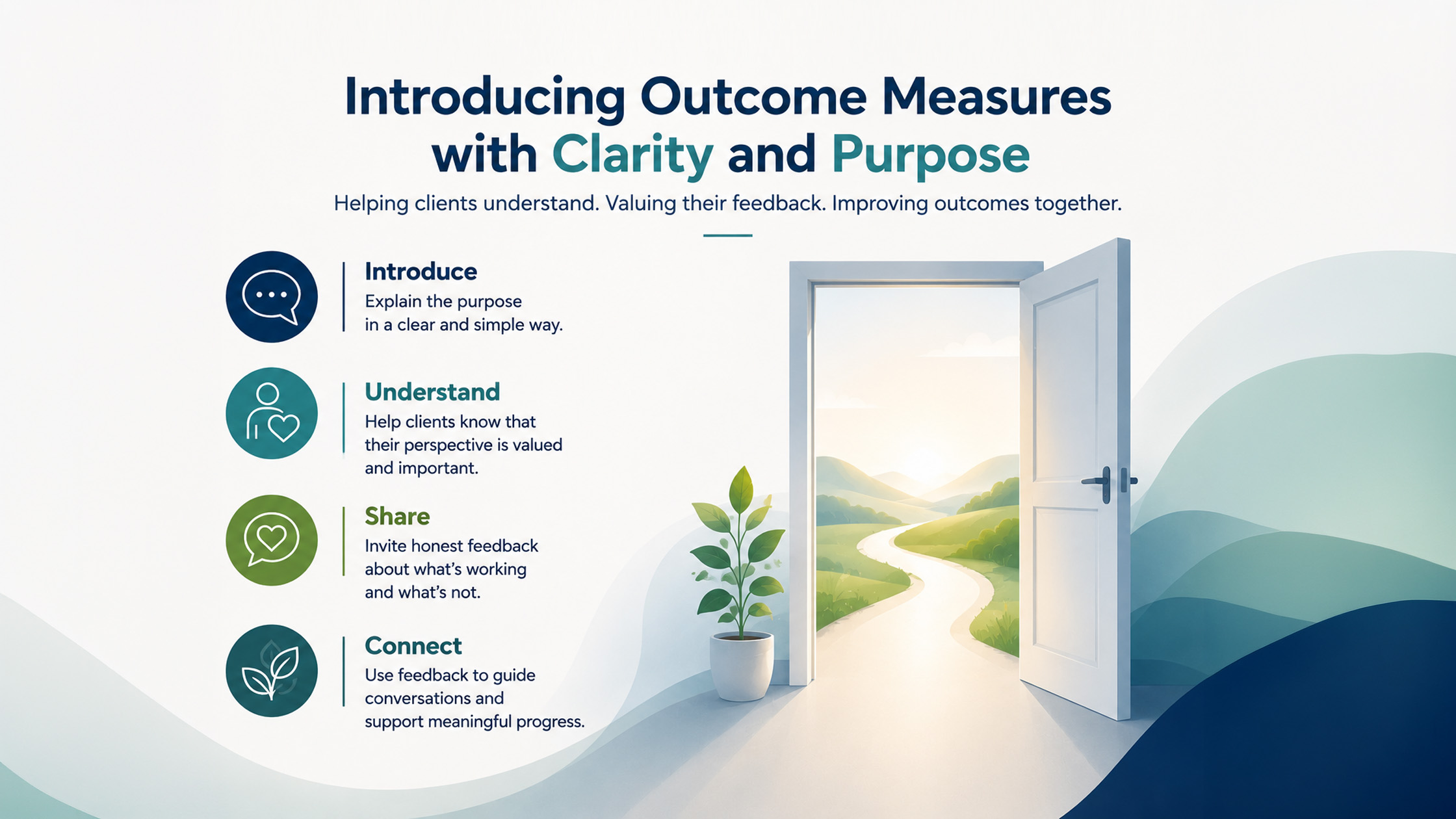
Introducing Feedback-Informed Treatment (FIT) into a therapy practice can be an important step toward making client feedback and outcome measurement a consistent part of clinical care.
But implementation is not necessarily a one-time process.
A practice may begin using the Outcome Rating Scale (ORS) and Session Rating Scale (SRS), train clinicians, and establish new workflows. As the practice evolves, however, the way FIT is used may change.
New clinicians join. Workflows develop. Questions arise. Teams may discover that some parts of the process work well while others need refinement.
If FIT implementation begins to lose momentum, that does not mean the approach has failed.
It can simply be a signal to look at what is happening and consider what would make the process more practical and sustainable.
What Does FIT Implementation Involve?
Feedback-Informed Treatment is more than introducing ORS and SRS.
Implementation means integrating client feedback into everyday clinical practice so that therapists can collect, review, discuss, and use that information as part of treatment.
This can involve:
- introducing measures to clients;
- collecting feedback consistently;
- reviewing information during treatment;
- discussing relevant feedback with clients;
- using feedback to support clinical decisions;
- incorporating outcome information into supervision;
- creating practical workflows for clinicians.
In other words, implementation is about moving from:
“We use outcome measures.” to: “Feedback is part of how we work.”
What Can Affect FIT Implementation?
Every practice is different, so implementation challenges will not look the same everywhere.
Several factors can influence how easily FIT becomes part of routine clinical work:
- how clearly the purpose of FIT is communicated;
- how confident clinicians feel using feedback;
- how easily information fits into existing workflows;
- whether clinicians have ongoing training and support;
- whether supervisors reinforce the use of feedback;
- how leadership supports the implementation;
- whether the technology makes information easy to access and use.
Recognizing these factors can help practices identify where additional support or refinement may be useful.
Make the Clinical Purpose Clear
One of the most important parts of implementing FIT in therapy is helping clinicians understand why it matters to their clinical work.
If outcome measurement is presented primarily as a reporting or administrative requirement, its clinical value can become less obvious.
Instead, practices can connect FIT to practical questions therapists already consider:
- Is the client making meaningful progress?
- What is the client experiencing?
- Has something changed?
- Does the therapy approach need to be reconsidered?
- Is there something about the therapeutic relationship worth exploring?
When clinicians understand the purpose behind the process, measurement becomes easier to connect with everyday clinical decision-making.
Make FIT Practical Within Everyday Workflows
Even when clinicians value FIT, the process needs to be practical.
Consider the entire workflow:
Complete → Review → Discuss → Use
Can clinicians easily access the information they need?
Can they see relevant changes over time?
Can feedback be incorporated into the session without unnecessary administrative steps?
Can outcome information be reviewed when appropriate in supervision?
The goal is not to create a separate process around therapy.
It is to make therapy outcome monitoring practical enough to become part of normal clinical work.
Technology can support this by making information easier to collect, organize, review, and report.
Support Clinicians With Training and Supervision
Introducing FIT may answer the question of what to use, but clinicians may also need support with how to use it well.
As therapists gain experience, they may encounter questions such as:
- What should I explore when a client’s progress changes?
- How should I respond to unexpected feedback?
- How do I use outcome information alongside my clinical judgement?
- What can I learn from feedback in supervision?
Ongoing training and supervision can give clinicians opportunities to work through these questions.
Supervision can also help practices reinforce that outcome information is a resource for clinical learning rather than simply a measure of compliance.
Review the Implementation as You Go
FIT implementation does not need to remain unchanged once it has been introduced.
Practices can periodically ask:
What is working well?
Where are clinicians experiencing friction?
What are clients telling us about the process?
What additional support would help?
Are we using the information, or simply collecting it?
These questions can help identify opportunities to strengthen the implementation before small issues become larger obstacles.
In this sense, the implementation process itself can benefit from the same principle at the heart of FIT: Use information to learn and make thoughtful adjustments.
What Sustainable FIT Implementation Looks Like
A sustainable approach does not mean every clinician or every session will look exactly the same.
It means the practice has created conditions that make feedback-informed work realistic and valuable.
Clinicians understand the purpose.
Clients understand why feedback is being collected.
Measures fit naturally into the workflow.
Supervision supports ongoing learning.
Leadership provides appropriate support.
And the practice remains open to refining its approach as it learns.
The goal is not simply to introduce FIT.
It is to make Feedback-Informed Treatment part of everyday clinical practice.
Final Thoughts
FIT implementation is a process that can develop over time.
If engagement changes or a workflow needs refinement, it can be an opportunity to pause, understand what is happening, and make thoughtful adjustments.
A clear clinical purpose, practical workflows, ongoing training, supportive supervision, and responsive leadership can all help strengthen implementation.
Ultimately, successful FIT implementation is not about collecting more information for its own sake.
It is about creating a practical way for client feedback and outcome information to contribute to better-informed conversations and clinical decisions.
Looking to strengthen FIT implementation in your practice?
MyOutcomes supports therapists, supervisors, and organizations with tools designed to make Feedback-Informed Treatment practical, accessible, and sustainable.
Book a demo to learn how MyOutcomes can support your implementation goals.